









Assisted gene flow (AGF) between populations has the potential to mitigate maladaptation due to climate change. However, AGF may cause outbreeding depression (especially if source and recipient populations have been long isolated) and may disrupt local adaptation to nonclimatic factors. Selection should eliminate extrinsic outbreeding depression due to adaptive differences in large populations, and simulations suggest that, within a few generations, evolution should resolve mild intrinsic outbreeding depression due to epistasis.
To weigh the risks of AGF against those of maladaptation due to climate change, we need to know the species' extent of local adaptation to climate and other environmental factors, as well as its pattern of gene flow. AGF should be a powerful tool for managing foundation and resource-producing species with large populations and broad ranges that show signs of historical adaptation to local climatic conditions.

 English
 897
897 Future changes in climate pose significant challenges for society, not the least of which is how best to adapt to observed and potential future impacts of these changes to which the world is already committed. Adaptation is a dynamic social process: the ability of societies to adapt is determined, in part, by the ability to act collectively.
This article reviews emerging perspectives on collective action and social capital and argues that insights from these areas inform the nature of adaptive capacity and normative prescriptions of policies of adaptation. Specifically, social capital is increasingly understood within economics to have public and private elements, both of which are based on trust, reputation, and reciprocal action. The public-good aspects of particular forms of social capital are pertinent elements of adaptive capacity in interacting with natural capital and in relation to the performance of institutions that cope with the risks of changes in climate.
Case studies are presented of present-day collective action for coping with extremes in weather in coastal areas in Southeast Asia and of community-based coastal management in the Caribbean. These cases demonstrate the importance of social capital framing both the public and private institutions of resource management that build resilience in the face of the risks of changes in climate. These cases illustrate, by analogy, the nature of adaptation processes and collective action in adapting to future changes in climate.
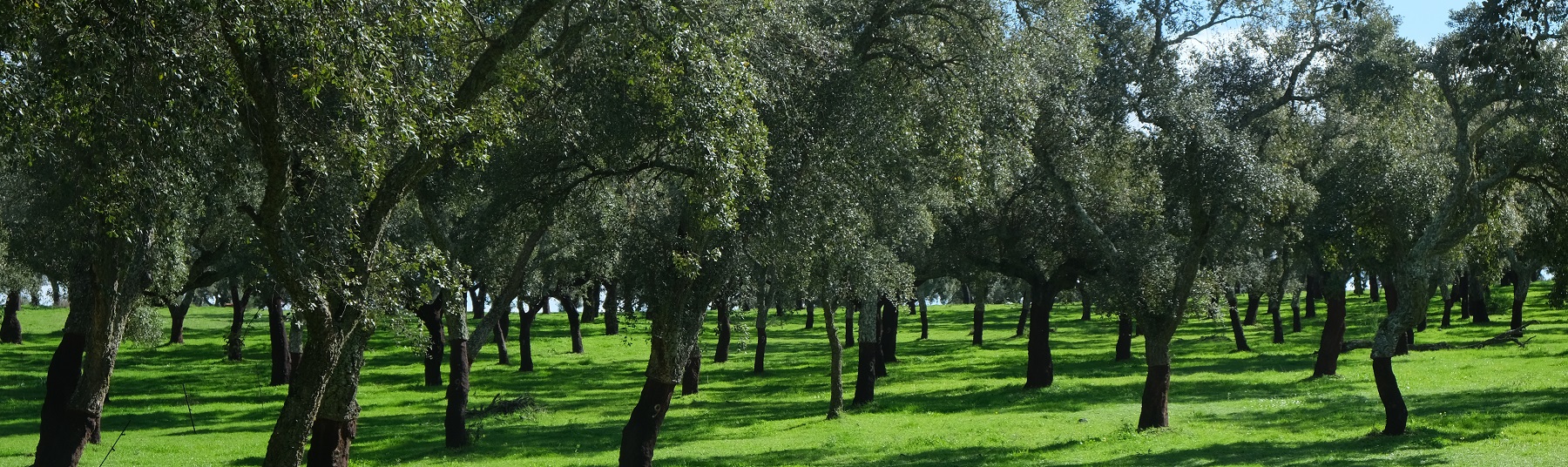
English 666 The Mediterranean region is projected to be extremely vulnerable to global change, which will affect the distribution of typical forest types such as native oak forests. However, our understanding of Mediterranean oak forest responses to future conditions is still very limited by the lack of knowledge on oak forest dynamics and speciesspecific responses to multiple drivers. We compared the longterm (1966–2006) forest persistence and land cover change among evergreen (cork oak and holm oak) and deciduous oak forests and evaluated the importance of anthropogenic and environmental drivers on observed changes for Portugal.
We used National Forest Inventories to quantify the changes in oak forests and explored the drivers of change using multinomial logistic regression analysis and an information theoretical approach. We found distinct trends among oak forest types, reflecting the differences in oak economic value, protection status and management schemes: cork oak forests were the most persistent (62%), changing mostly to pines and eucalypt; holm oak forests were less persistent (53.2%), changing mostly to agriculture; and deciduous oak forests were the least persistent (45.7%), changing mostly to shrublands.
Drivers of change had distinct importance across oak forest types, but drivers from anthropogenic origin (wildfires, population density, and land accessibility) were always among the most important. Climatic extremes were also important predictors of oak forest changes, namely extreme temperatures for evergreen oak forests and deficit of precipitation for deciduous oak forests.
Our results indicate that under increasing human pressure and forecasted climate change, evergreen oak forests will continue declining and deciduous oak forests will be replaced by forests dominated by more xeric species. In the long run, multiple disturbances may change competitive dominance from oak forests to pyrophytic shrublands. A better understanding of forest dynamics and the inclusion of anthropogenic drivers on models of vegetation change will improve predicting the future of Mediterranean oak forests.
English 598 Addressing the gaps between theory, research and practice, this paper explores a hybrid mindset of participatory action research (PAR), geoprospective and participatory geographical information system (PGIS).
This approach brings together stakeholders, policy-makers and researchers - in an agricultural peri-urban region of Portugal, the Lezíria do Tejo region - to anticipate the possible changes in agricultural territories, while taking spatial dynamics into account. It uses a four-step methodology which integrates qualitative and quantitative approaches to select stakeholders' interview areas, implement prospective workshops to engage and explore the stakeholders' interests and encourage actions towards finding solutions for long-term agricultural sustainability in this region.
The results from our study highlight that more participative approaches such as the ones developed here must be implemented towards decision-making, since they help to dispel the distrust between stakeholders, strengthen community cohesion and also contribute to build common solutions drawing upon various perspectives. From a PAR perspective, this work contributes to bridge the gap between academia and practitioners, as is shown by a willingness of the practitioners to actively participate in the research under progress.
English 568 This paper evaluates the impacts of climate change to European economies under an increase in global mean temperature at +2. °C and +4. °C. It is based on a summary of conclusions from available studies of how climate change may affect various sectors of the economies in different countries. We apply a macroeconomic general equilibrium model, which integrates impacts of climate change on different activities of the economies.
Agents adapt by responding to the changes in market conditions following the climatic changes, thus bringing consistency between economic behaviour and adaptation to climate change. Europe is divided into 85 sub-regions in order to capture climate variability and variations in vulnerabilities within countries. We find that the impacts in the +2. °C are moderate throughout Europe, with positive impacts on GDP in some sub-regions and negative impacts down to 0.1. per cent per year in others.
At +4. °C, GDP is negatively affected throughout Europe, and most substantially in the southern parts, where it falls by up to 0.7. per cent per year in some sub-regions. We also find that climate change causes differentiations in wages across Europe, which may cause migration from southern parts of Europe to northern parts, especially to the Nordic countries.
English 679